
Marketplaces promise visibility and quick bookings, which is why many restaurants turn to them as an easy way to fill tables. In the short term, this can seem like a perfect solution - more reservations without incurring significant marketing expenses.
But over time, over-reliance on third-party platforms can silently erode your margins, customer relationships, and brand independence. The danger is subtle: everything looks fine until you realize you’ve been paying for customers who would have booked with you directly.
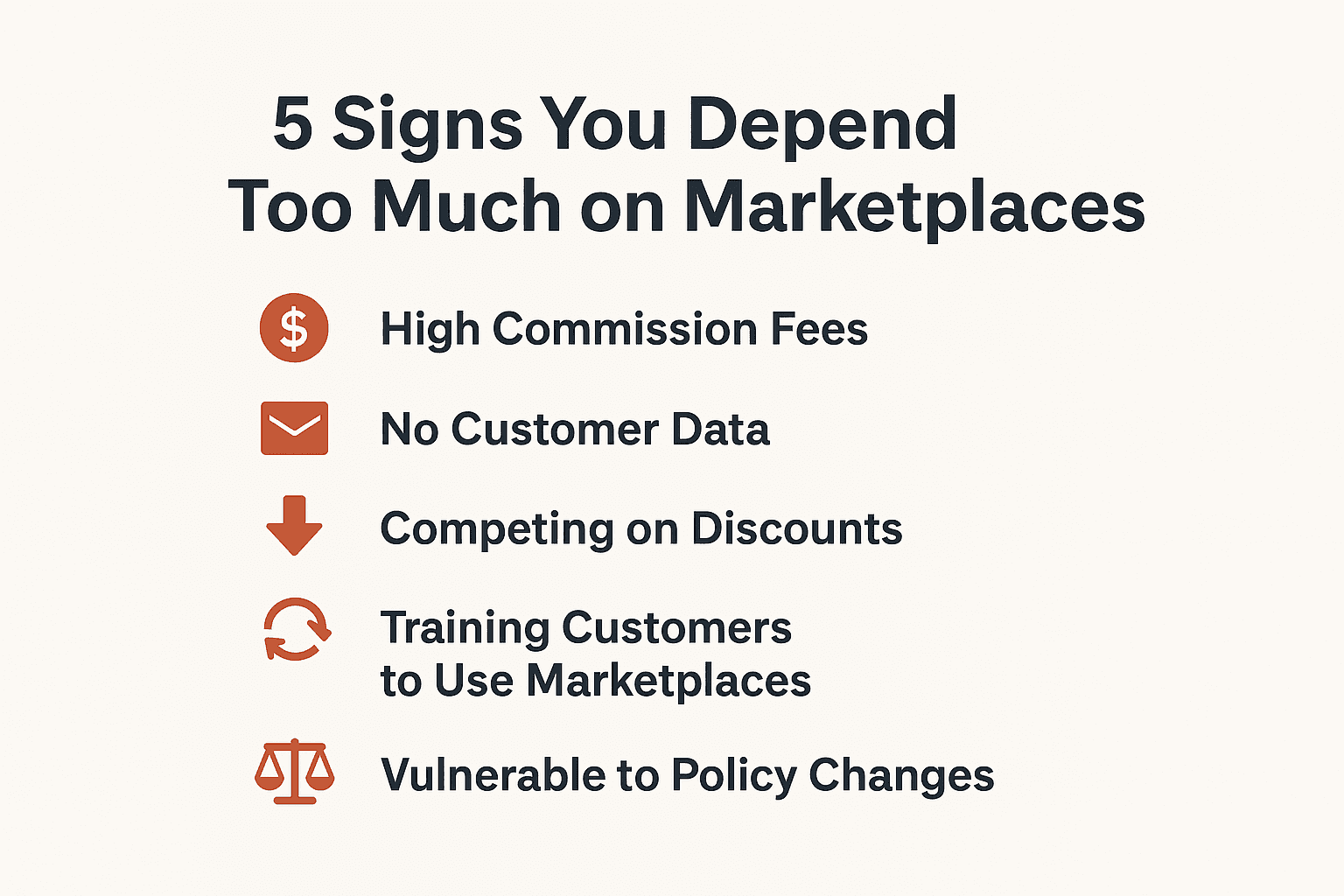
If you recognize these five signs, it’s time to reassess your strategy and regain control of your reservations.
1. Commission Fees Are Eating Into Your Profits
Every booking that comes through a marketplace comes at a cost. While $1–$2 per guest may seem minor, multiplied over hundreds or thousands of covers per month, it quickly becomes a major financial leak. Example calculation:
- Average bookings per month: 1,000 covers
- Commission per guest: $2
- Monthly cost: $2,000
- Yearly cost: $24,000
That’s equivalent to:
- The full-time salary of a sous-chef or manager,
- A complete kitchen equipment upgrade, or
- A year’s worth of marketing campaigns to attract direct customers.
Tip: Calculate how much you pay in commissions annually.
If that number equals your rent, payroll, or more than 5–10% of total revenue, you’re too dependent on third-party bookings.
2. You Don’t Own Your Customer Data
When diners book through a marketplace, their data stays with the platform, not you. This means:
- No email addresses for remarketing campaigns,
- No insight into dietary preferences or special occasions,
- No ability to track loyalty or reward repeat visits.
Essentially, you rent your own customers instead of owning the relationship.
Red flag scenario: A guest dines at your restaurant 10 times in a year, but every booking is through a marketplace.
- You pay a fee every single time for a guest who already knows you.
- You can’t invite them directly to special events or promotions.
- The marketplace controls their loyalty, not you.
Solution: Encourage direct bookings with email collection at checkout, loyalty incentives, or perks like priority seating for guests who book directly on your website.
3. Your Brand Competes on Discounts, Not Experience
Marketplaces place you side-by-side with dozens, sometimes hundreds, of competitors. Guests can filter by:
- Lowest price
- Fastest availability
- Biggest promotions
This environment turns your restaurant into a commodity, where visibility depends more on discounts and paid boosts than on your unique food, service, and atmosphere. Result:
- Instead of being chosen for your signature experience, you’re competing in a race to the bottom.
- Guests may remember the deal, not your restaurant name.
Pro tip: Use marketplaces for initial discovery only, then move guests to direct booking channels where your brand story and value shine.
4. You’re Training Your Own Customers to Use Marketplaces
One of the hidden costs of relying on marketplaces is behavioral. Even your loyal, repeat guests start booking through third-party apps if that’s where they first found you, especially if you don’t promote your own booking system.
Example scenario: You run a successful Facebook ad campaign costing $1,000. The ad drives awareness, and guests search for your restaurant. Instead of booking on your website, they book via the marketplace. You pay twice: once for the ad, and again in commission fees.
Over time, this trains guests to bypass your direct channels, and you pay for the privilege of serving your own customers.
Solution:
- Offer incentives for direct booking, like free dessert or drink vouchers.
- Make your website booking button prominent and simple to use.
- Train staff to educate guests: “Next time, you can book directly with us for faster confirmation.”
5. Your Business Feels Vulnerable to Marketplace Policies
Marketplaces control the rules, and they can change anytime, without notice. Possible risks:
- Commission increases overnight, eating further into margins.
- Algorithm updates push your listing lower, reducing visibility.
- New policies limit how you communicate with guests or cancel bookings.
- Platforms may prioritize competitors who pay for boosted placements.
Key question to ask yourself: If the marketplace shut down tomorrow, how many reservations would you still receive directly?
If the answer scares you, your business is overly dependent on that single channel.
Pro tip: Start building multiple direct booking channels now: website, Google Reservations, branded apps, so you’re never at the mercy of one platform.
Calculating Your Marketplace Dependence
To measure your reliance on third-party platforms, use this simple formula:
Marketplace Dependency Rate (MDR) = (Marketplace Bookings ÷ Total Reservations) × 100
Example:
- Marketplace bookings: 700 per month
- Total reservations: 1,000 per month
- MDR = (700 ÷ 1,000) × 100 = 70%
Goal: Keep MDR below 30% for a healthy, balanced booking mix.
Final Thoughts
Marketplaces can be valuable for exposure and filling slow nights, but they should never replace your own direct booking channels. Smart restaurants use third-party platforms strategically, while investing in:
- A branded reservation system like Reservation.Tools,
- Google integrations for direct bookings via Search and Maps,
- Loyalty programs and email marketing to nurture repeat guests,
- Strong SEO and social presence to drive organic traffic.
The more you control your bookings, the more you control your future.
Stop renting customers from marketplaces and start owning your guest relationships.
 App Store
 Google Play
 Web App