
 Technology
Increase the number of reservations of your restaurant with Google
The Reservation and Customer Relation Management Tool Reservation.Tools become an official partner of “Reserve with Google”.
02/09/2026

Walk into any restaurant back office and you'll find a dashboard, a spreadsheet, a POS report, and a reservation report. Between them, thirty or forty numbers. Most owners look at two: revenue and food cost. Everyone else looks at none.
The problem isn't that restaurateurs don't care about data. It's that most of the numbers in these reports don't tell you anything actionable. Seven KPIs, tracked weekly, tell you almost everything about the health of your restaurant. The rest is noise.
1. Revenue per available seat hour (RevPASH)
Not total revenue. Revenue divided by (seats × hours of service). This is the hotel-industry math borrowed for restaurants, and it's the single best measure of how efficiently you're using your capacity. A small restaurant with high RevPASH is making more money than a big one with low RevPASH.
2. Average check by service
Lunch, dinner, weekend, weekday — treat them as separate businesses. A check average that's creeping down is the earliest sign of trouble; a check average that's growing because guests are choosing better is the healthiest kind of growth.
3. Covers per night vs. capacity
If you're full every Friday but only 40% on Tuesday, those are two totally different problems. Covers as a percentage of capacity by day of week tells you where to focus marketing, where to cut staff, and where to experiment with pricing.
4. No-show rate
Industry average is around 10-15%. If yours is higher, you have a deposits problem, a confirmation problem, or a marketing-to-the-wrong-audience problem. If it's below 5%, you've nailed it — protect it.
5. Repeat guest rate
What percentage of tonight's guests have been before? If you don't know, you have no loyalty program — you just have occasional regulars you can't name. The healthiest restaurants are at 40-60% repeat on a normal night. Acquisition is expensive; retention is free and more profitable.
6. Time to seat (from arrival to at table)
If this averages over three minutes with a reservation, something is off — probably at the host stand or in how you've scheduled turns. It's a guest-experience number that shows up in reviews months later.
7. Labour cost as a percentage of revenue
Food cost gets all the attention; labour is where restaurants actually die. If labour creeps from 28% to 33%, your margin has been halved and nobody noticed because the food cost looked fine. Track it weekly.
What to ignore
The seven numbers above, tracked every Monday morning, tell you more than the entire rest of your dashboard. Reservation.Tools gives you a clean report on covers, no-shows, repeat guests, and turn times without opening a spreadsheet — so the Monday review takes ten minutes instead of two hours.
TechnologyThe Reservation and Customer Relation Management Tool Reservation.Tools become an official partner of “Reserve with Google”.

How to manage effectively the customer relationship for your restaurant
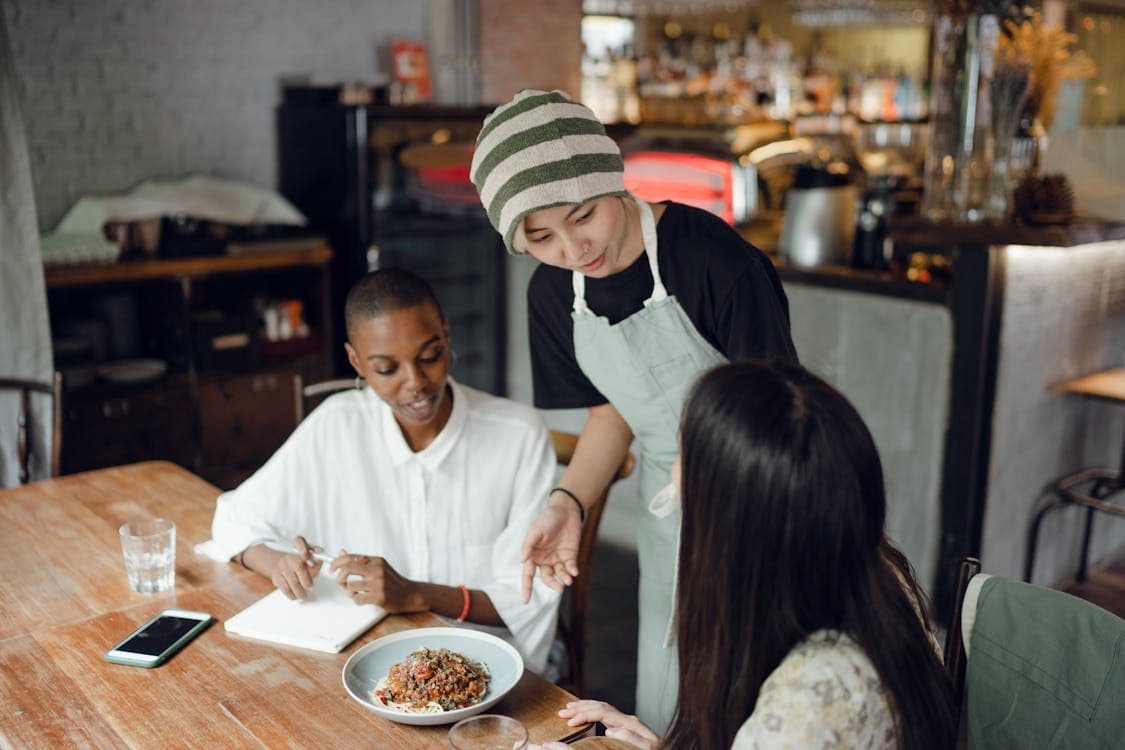
Direct communication with customers

How to launch a Christmas charity initiative for your restaurant
Have questions?
 App Store
 Google Play
 Web App