
 Business
Increase the number of reservations of your restaurant with Google
The Reservation and Customer Relation Management Tool Reservation.Tools become an official partner of “Reserve with Google”.
09/15/2025
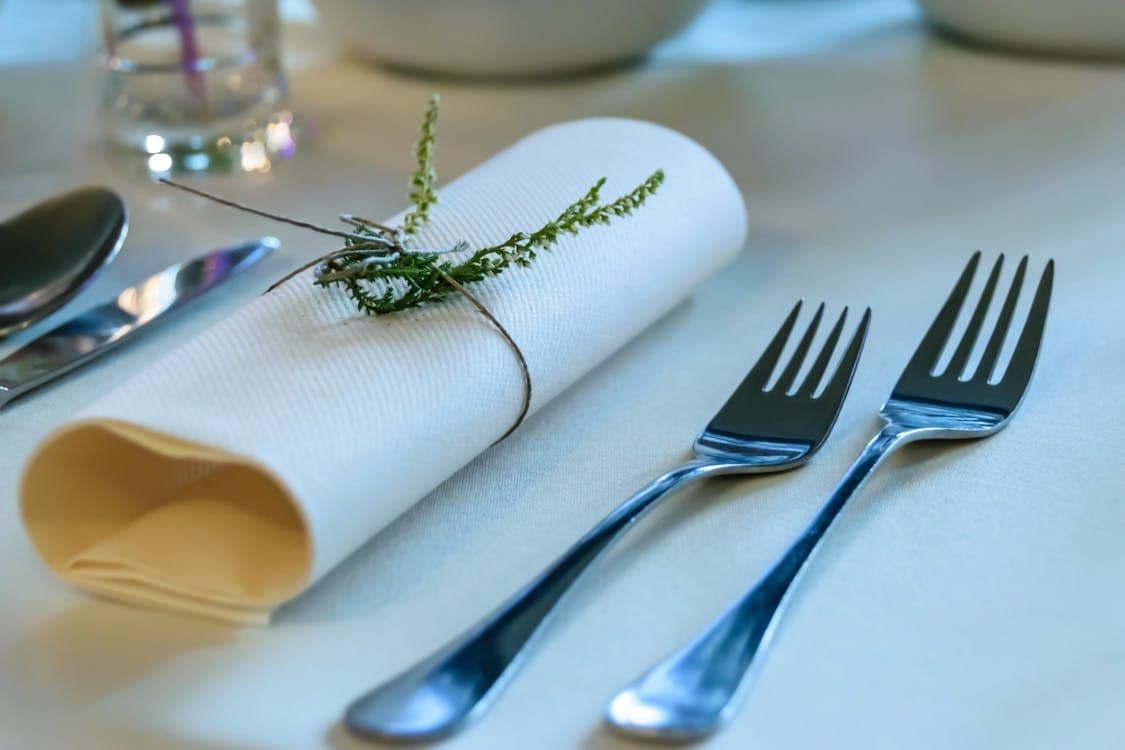
For an object we now place on the table without a second thought, the fork has had a surprisingly dramatic journey. It has been called unnecessary, sinful, extravagant, effeminate, and “the devil’s tool.” Not bad for something that simply lifts food from plate to mouth.
Today, the fork is a universal emblem of dining etiquette. But it wasn’t always so. Its rise from a controversial accessory to an essential table companion is a story of culture, class, resistance, and a little bit of scandal.
Let’s go back to where it all began.
For most of human history, people ate with their hands.
Not because they were uncivilized — but because it made perfect sense.
A typical medieval dining setup included:
Food was often prepared in larger pieces meant to be shared. The idea of piercing it daintily with a metal prong would’ve seemed absurd. So where did things change?
The earliest table forks appeared in the Byzantine Empire around the 7th to 9th century.
They were elegant, two-pronged, and made of gold or silver, and were used mostly by the elite.
And this is where the story gets spicy.
When a Byzantine princess married into the Venetian court in the 11th century, she brought her forks with her and shocked everyone. Venetian chronicles describe the fork as an unnecessary luxury and a symbol of moral weakness.
James Cross Giblin even wrote:
“God in His wisdom has provided man with natural forks, his fingers. Therefore, it is an insult to Him to substitute artificial metal ones.”
Yes. People were offended by forks.
It would take centuries before Italy fully embraced them… but once it did, everything changed.
By the Renaissance, Italy had become a center of culinary sophistication.
Refined courts, delicate pastries, complicated sauces — suddenly the fork made practical sense.
Italian nobility used forks:
Travelers from France and England mocked the Italians at first…
Then quietly adopted the habit once they realized it actually worked.
By the 1600s, the fork had become a symbol of refinement across Italy.
The fork traveled through Europe in waves:
The French resisted at first too extravagant, too “Italian.”
But by Louis XIV’s era, forks were embraced as stylish, refined, and distinctly modern.
England held out the longest.
When the fork appeared there in the early 1600s, Londoners found it bizarre.
English writer Thomas Coryate proudly used one in public and was ridiculed so aggressively that people started calling him “Forked Coryate.”
Still, he unintentionally launched the trend.
By the 18th century, England was fully converted and forks became part of everyday life.
What truly democratized the fork was mass production.
Factories made cutlery affordable. Restaurants standardized place settings. Households began buying full dining sets.
The fork was no longer a luxury item, but a necessity.
And with mass adoption came innovation:
The dining table began to look like a curated experience, not a survival strategy.
It’s easy to forget how recent this shift really is.
In just a few centuries, the fork went from:
Today, restaurants use forks not just as tools, but as part of the dining experience:
A well-designed fork tells a guest:
“You’re in good hands. Enjoy the experience.”
And today, it sits quietly on your table, polished and ready, as if it had always been there.
BusinessThe Reservation and Customer Relation Management Tool Reservation.Tools become an official partner of “Reserve with Google”.

How to manage effectively the customer relationship for your restaurant

Direct communication with customers

How to launch a Christmas charity initiative for your restaurant
Have questions?
 App Store
 Google Play
 Web App